What is Strategic SEO? (The Real Definition)
Strategic SEO is a long-term, integrated approach to search optimization that aligns with your business goals and focuses on building sustainable competitive advantages in search.
Unlike tactical SEO—which treats optimization as isolated tasks—strategic SEO creates a system where every piece works together: your content strategy, technical infrastructure, user experience, link building, and brand presence all reinforce each other.
Think of it this way:
Tactical SEO: “We need to rank for ‘best CRM software’—let’s write an article and build some links.”
Strategic SEO: “What are our customers’ biggest problems at each stage of their journey? How can we become the definitive resource they trust? What content ecosystem will make competitors irrelevant?”
Strategic SEO answers bigger questions: Where should we be in 18 months? How does search visibility support our revenue goals? What competitive moats can we build that are difficult to replicate?
Why Strategic SEO Matters More in 2026
The search landscape has fundamentally changed. If you’re using the same SEO playbook from even two years ago, you’re already falling behind. Here’s why strategic thinking is no longer optional.
1. AI Search is Rewriting the Rules
Google’s AI Overviews, ChatGPT’s SearchGPT, Perplexity, and other AI engines don’t just rank websites—they synthesize information from multiple sources to generate direct answers. Users get what they need without clicking through to your site.
Strategic SEO prepares you for this shift by building authority that AI systems recognize and cite. When you become the trusted source in your niche, AI-powered search engines reference your content as the foundation for their answers. You don’t just rank—you become the source material.
2. Algorithm Updates Are More Frequent and Devastating
Google updates its algorithm thousands of times annually. Sites built on tactical tricks get crushed by updates like Helpful Content, Core Updates, and spam filters. Meanwhile, strategically optimized sites remain stable because they’re built on fundamentals that don’t change: quality content, excellent user experience, genuine expertise.
3. Competition Has Intensified Across Every Industry
Every industry has become more competitive online. The companies winning in search aren’t just doing SEO better—they’re thinking about it fundamentally differently. They’ve integrated SEO into their business strategy, product development, content creation, and customer experience.
4. Paid Advertising Costs Continue Rising
Cost per click on Google Ads, Facebook, and LinkedIn increases every year. Strategic SEO creates a sustainable alternative that becomes more cost-effective over time. Once you rank well organically, those visitors keep coming without additional ad spend—and the ROI compounds as your authority grows.
Strategic Keyword Mapping: Aligning Search Intent with Business Goals
Here’s where most SEO strategies fail: they chase high-volume keywords without considering search intent or business value. Strategic SEO maps keywords to user intent across the entire buyer journey.
Understanding the Three Types of Search Intent
Instead of chasing high-volume keywords blindly, strategic SEO targets search intent across every stage of the buyer journey. Here’s how to map it:
• Ultimate guides
• How-to tutorials
• Educational articles
• Problem-solution content
• Comparison articles
• “Best of” roundups
• Tool calculators
• Case studies
• Service pages
• Product pages
• Pricing pages
• Contact/demo pages
Strategic Keyword Mapping in Practice
Instead of targeting just “SEO services” (high competition, vague intent), strategic SEO builds a complete funnel:
Top of Funnel (Informational):
- “What is strategic SEO”
- “SEO strategy framework”
- “How to create an SEO roadmap”
- “SEO content planning guide”
Middle of Funnel (Commercial):
- “Strategic SEO vs tactical SEO”
- “Best SEO strategy tools”
- “SEO agency vs in-house”
- “SEO funnel optimization”
Bottom of Funnel (Transactional):
- “Strategic SEO services”
- “Hire SEO strategist”
- “Enterprise SEO consulting”
Why This Works: By creating content for every stage, you capture users early in their journey, build trust through education, and convert them when they’re ready. Your competitors who only target bottom-funnel keywords miss 80% of potential customers.
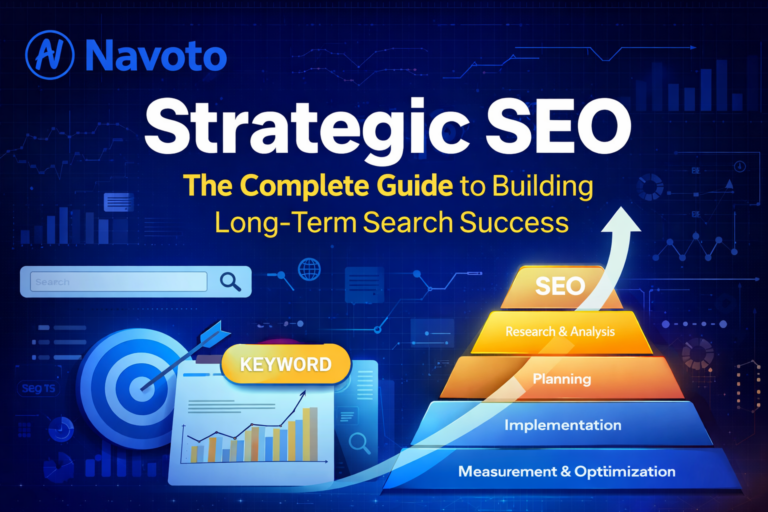
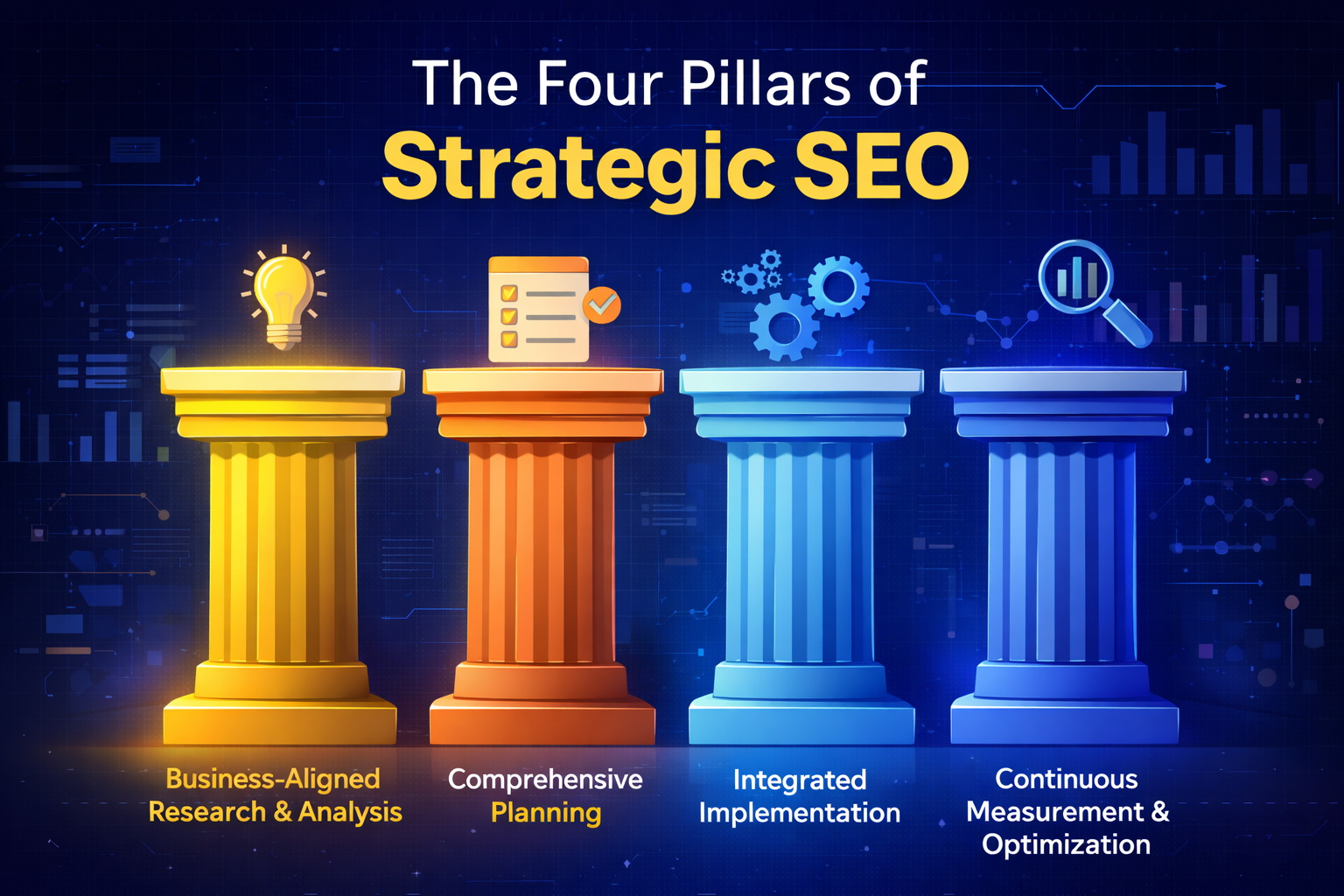
The Four Pillars of Strategic SEO
Strategic SEO isn’t one thing—it’s an interconnected system built on four pillars. Master these, and you create a foundation that drives compounding growth.
Pillar 1: Business-Aligned Research & Analysis
Strategic SEO starts by understanding your business, not just search engines. Before touching keywords or creating content, answer these questions:
- What are your actual business goals? (Revenue targets, customer acquisition, market share)
- Who are your ideal customers and what problems keep them up at night?
- Where are you strong and where are you vulnerable?
- What are competitors doing, and where are their blind spots?
- Which search opportunities would actually move the needle for revenue?
Pillar 2: Comprehensive Planning & Roadmapping
Once you understand the landscape, build a detailed 12-24 month plan. This isn’t a vague wishlist—it’s a concrete roadmap with clear objectives tied to business KPIs, prioritized initiatives, specific timelines, resource allocation plans, risk assessments, and measurement frameworks.
Pillar 3: Integrated Implementation
Strategic SEO touches every part of your digital presence. Implementation requires coordination across:
- Content Marketing: Creating valuable content that serves users and supports SEO goals
- Technical Development: Building fast, mobile-friendly, search-engine-friendly architecture
- User Experience Design: Creating intuitive navigation that keeps users engaged
- Link Building: Earning quality backlinks through relationships and remarkable content
- Brand Marketing: Building awareness that drives branded searches
Pillar 4: Continuous Measurement & Optimization
Strategic SEO never stops evolving. You constantly monitor performance, test new approaches, and refine strategy based on what works.
Our analytics consulting services can help you set up proper measurement frameworks.
Strategic SEO Uses Topic Authority (Not Single Keywords)
This is one of the biggest shifts in modern SEO: Google no longer ranks pages based on individual keywords. It ranks sites based on topical authority—how comprehensively you cover a subject area.
The Topic Cluster Model
(Comprehensive Pillar Content)
Why Topic Clusters Work
When you build comprehensive topic coverage:
- Google recognizes expertise: You demonstrate mastery of an entire subject
- Internal linking signals relevance: Strategic links show how topics connect
- You rank for hundreds of long-tail terms: Comprehensive coverage captures variations
- Users find everything they need: Complete coverage increases time on site
- You become the go-to resource: Users return for more content
Tools That Support Strategic SEO
Strategic SEO requires the right technology stack. Here are the essential tool categories:
SEO Audit Tools
Crawl your site to identify technical issues, broken links, duplicate content, and optimization opportunities.
Keyword Research Platforms
Discover search volume, competition levels, keyword difficulty, and related terms to build comprehensive topic coverage.
Content Optimization Tools
Analyze content quality, readability, keyword usage, and provide recommendations for improvement.
Analytics Dashboards
Track traffic sources, user behavior, conversion paths, and measure ROI from organic search efforts.
Backlink Analysis Tools
Monitor your backlink profile, identify link opportunities, analyze competitor links, and track domain authority.
CRM Integration
Connect organic traffic data to customer records, track lead source attribution, and measure customer lifetime value from SEO.
When Strategic SEO May Not Work Fast (Reality Check)
Let’s be brutally honest: Strategic SEO isn’t magic, and it’s not always the right choice for every situation. Here’s when you should expect slower results:
Situations Where Strategic SEO Faces Headwinds
1. Brand New Websites (0-6 months old)
Google has a “sandbox” period for new domains. Even with perfect SEO, you’ll struggle to rank for competitive terms in your first 6-12 months.
What to do: Focus on long-tail keywords, build backlinks, create remarkable content, and be patient. Consider paid advertising to drive traffic while SEO matures.
2. Highly Competitive Niches
Competing against industry leaders with domain authority scores above 70 will take 18-24+ months and significant resources.
What to do: Target niche-specific long-tail keywords, create ultra-specialized content, build topical authority in sub-niches.
3. Limited Budgets (Under $2,000/month)
Strategic SEO requires investment in content creation, technical optimization, link building, and tools. With very limited budgets, progress will be slow.
What to do: Start with technical foundations and one topic cluster. Focus on quality over quantity. DIY what you can, outsource expertise.
4. Poor Product-Market Fit
If your product doesn’t solve a real problem people search for, SEO can’t fix that. You’ll drive traffic that doesn’t convert.
What to do: Fix your product or positioning first. Use paid advertising to test messaging before investing heavily in SEO.
5. Websites with Technical Debt
If your site is slow, has poor mobile experience, or broken architecture, fix these before strategic SEO shows results.
What to do: Conduct a comprehensive technical audit. Our web development team can help evaluate your options.
The Patience Principle
Strategic SEO requires patience because you’re building assets that compound over time:
- Months 1-3: Foundation building, minimal visible results
- Months 4-6: First signs of traffic growth, some keywords ranking
- Months 7-12: Momentum builds, traffic accelerates, conversions increase
- Year 2+: Compounding returns, market leadership, sustainable competitive advantage
Ready to Build Your Strategic SEO Foundation?
Navoto specializes in long-term SEO partnerships that drive real business growth. Our team combines technical expertise, content strategy, and data analytics to create SEO programs that deliver compounding returns.
Or explore our comprehensive SEO services and digital marketing solutions.
Conclusion: From Tactics to Strategy
The transition from tactical to strategic SEO isn’t easy. It requires patience, investment, commitment, alignment, and discipline. Results take 6-12 months to materialize. You need more resources upfront for planning. Success demands consistent effort over years and cross-functional support.
But for companies ready to build sustainable competitive advantages, strategic SEO offers exceptional returns. It transforms search from a traffic source into a business asset that compounds in value over time and becomes increasingly difficult for competitors to replicate.
The companies dominating search results in your industry aren’t just executing better tactics—they’re playing a different game entirely.
The question isn’t whether you can afford to invest in strategic SEO. It’s whether you can afford to keep playing the tactical game while competitors build unassailable advantages.
FAQs
What’s the main difference between tactical and strategic SEO?
Tactical SEO focuses on individual optimization tasks without a cohesive long-term plan. Strategic SEO aligns all SEO activities with business objectives, treats optimization as an integrated system, and focuses on building sustainable competitive advantages rather than quick ranking wins.
How long does it take to see results from strategic SEO?
Expect 4-6 months for initial sustainable growth. Full strategic SEO results typically mature over 12-18 months. Unlike tactical approaches that spike and crash, strategic SEO builds momentum that accelerates over time. Months 1-3 show minimal results as you build foundation. Months 4-6 bring first traffic growth. Months 7-12 show momentum building. Year 2+ delivers compounding returns.
How much should I budget for strategic SEO?
Budget varies based on company size and competitiveness. General guidelines: Small businesses $3,000-8,000 monthly, mid-market $8,000-20,000 monthly, enterprise $20,000-50,000+ monthly. Strategic SEO generates compounding returns, becoming more cost-effective over time as organic traffic grows and customer acquisition costs decrease.
Does strategic SEO work for small businesses?
Yes, but scale the approach to your size. Small businesses should focus on local SEO, niche topics with less competition, building topical authority in their specialty, and long-tail keywords with clear purchase intent. The principles remain the same, but scope and resources differ. Partner with experts like Navoto who understand how to make strategic SEO work at your scale.